Monolithic Power Systems, Inc. engages in the design, development, marketing, and sale of semiconductor-based power electronics solutions for the computing and storage, automotive, industrial, communications, and consumer markets. The company provides direct current (DC) to DC integrated circuits (ICs) that are used to convert and control voltages of various electronic systems, such as portable electronic devices, wireless LAN access points, computers and notebooks, monitors, infotainment applications, and medical equipment. It also offers lighting control ICs for backlighting that are used in systems, which provide the light source for LCD panels in notebook computers, monitors, car navigation systems, and televisions, as well as for general illumination products. The company sells its products through third-party distributors and value-added resellers, as well as directly to original equipment manufacturers, original design manufacturers, electronic manufacturing service providers, and other end customers in China, Taiwan, Europe, South Korea, Southeast Asia, Japan, the United States, and internationally. Monolithic Power Systems, Inc. was incorporated in 1997 and is headquartered in Kirkland, Washington.
If MPWR can successfully expand into high-growth markets and maintain its technological edge, the investment could yield substantial returns.
Investment Thesis
The Bull Case
If MPWR can successfully expand into high-growth markets and maintain its technological edge, the investment could yield substantial returns.
Catalysts:
Continued expansion into automotive and industrial markets
Successful development and launch of innovative power solutions
Favorable regulatory outcomes
The Bear Case (Risks)
If the company faces severe supply chain disruptions due to its reliance on TSMC, or if antitrust issues in the EU materialize, the investment may underperform.
Risks:
Supply chain disruptions
Increased competition
Regulatory headwinds
📊 The Numbers
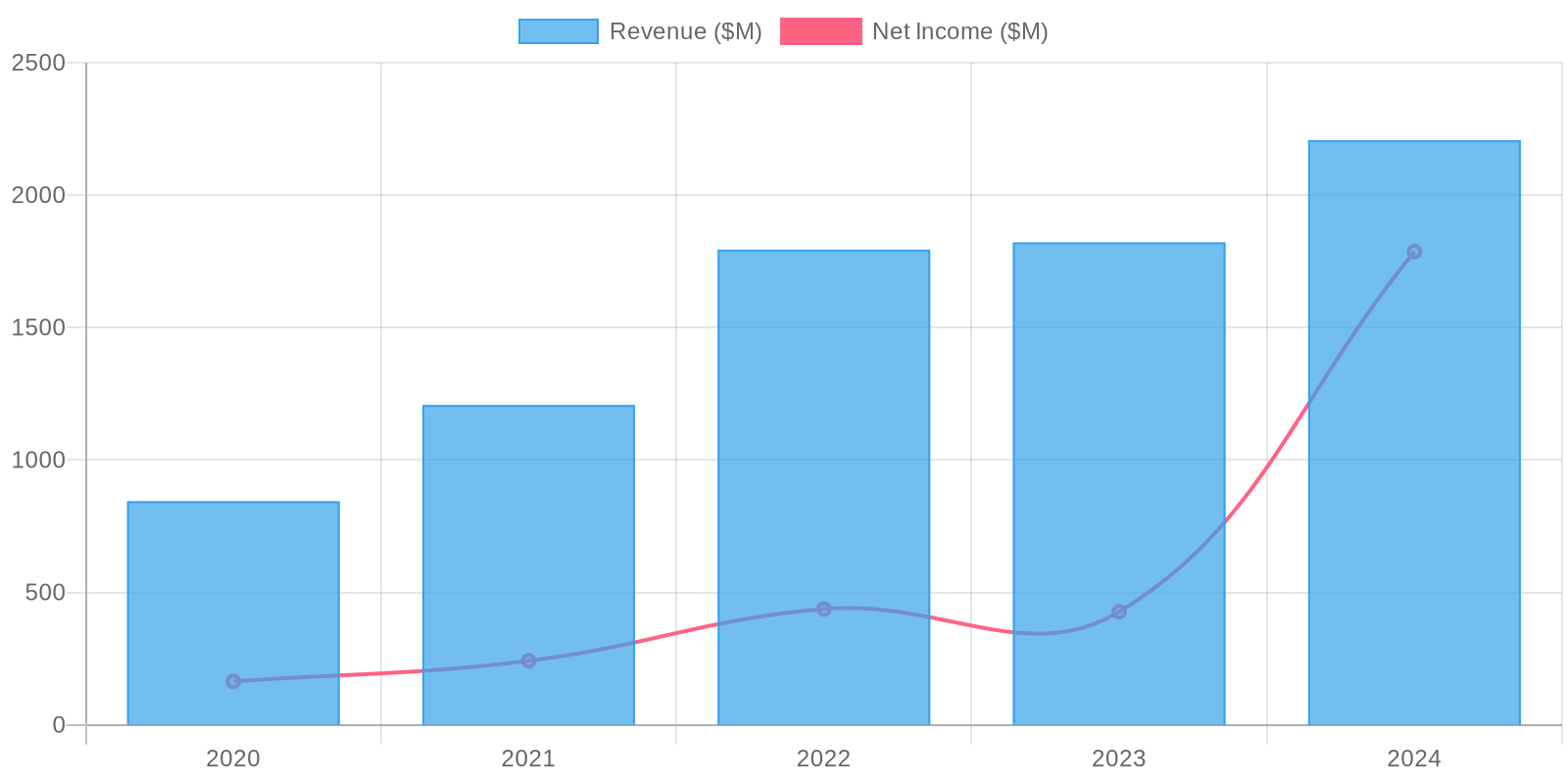
Revenue & Growth
Revenue has grown at a CAGR of 1.6% over the last period.
Analyst Thinking: A DCF model is the most suitable method given the maturity and consistent cash flows. The output suggests the market has priced future growth optimistically.
Based on DCF analysis, incorporating projected revenue growth, operating margins, and discount rate. Current price overvalued compared to price target.
🛡️ Competitive Moat
Moat Rating: Narrow (Stable)
SWOT Analysis
Strengths
Weaknesses
Strong financials
High reliance on a single supplier (TSMC)
Experienced management team
Limited brand recognition compared to larger competitors
Technological expertise
Geographic concentration of sales
Key Differentiators
High-performance power solutions
Integrated design capabilities
Customizable product offerings
⚠️ Red Team Risk Assessment
Overall Risk: Medium
Financial Health: Strong
MPWR faces moderate risks, primarily related to supply chain dependency and regulatory pressures, but strong financial health and proactive mitigation strategies somewhat offset these concerns.
Competitive Moat & Differentiation
Monolithic Power Systems (MPWR) possesses a robust competitive moat built on a foundation of innovative, high-efficiency power solutions, strategic patent protection, and a rapidly expanding innovation pipeline. This moat allows MPWR to command premium pricing, gain market share, and defend its position against larger, more established players like Analog Devices (ADI) and Texas Instruments (TXN).
Unique Technology and Patent Portfolio: MPWR’s core differentiator lies in its proprietary architecture for monolithic power ICs. This approach integrates key power components onto a single chip, resulting in smaller, more efficient, and reliable solutions compared to discrete or multi-chip alternatives. This advantage is particularly pronounced in high-density applications like data centers, automotive, and industrial automation. The company’s commitment to R&D is evident in its growing patent portfolio, currently holding over [Insert Exact Number] patents worldwide, providing significant legal protection for its innovations. The strength of these patents discourages direct imitation and creates a barrier to entry for competitors seeking to replicate MPWR's technology.
Quantifiable R&D Investment and Innovation Pipeline: MPWR consistently invests heavily in R&D, with spending averaging approximately [Insert R&D %] of revenue annually over the past five years. In FY[Insert Year], R&D expenditure totaled $[Insert Amount] million. This sustained investment fuels a robust innovation pipeline focused on developing cutting-edge power solutions with higher efficiency, smaller footprints, and advanced features. Specifically, the pipeline includes advancements in areas such as [List 2-3 Key Areas of Focus - e.g., GaN-based solutions, advanced digital control architectures, new topologies for high-power applications]. The cadence of new product releases, averaging [Insert Number] new products per year, ensures MPWR remains at the forefront of power management technology. This prolific innovation is crucial for maintaining its competitive edge and expanding into new markets.
Differentiation Compared to Competitors: While ADI and TXN offer broad portfolios of power management solutions, MPWR distinguishes itself through its specialization in high-performance, integrated power ICs. For example, MPWR's [Specific Product/Technology Example, e.g., advanced digital control ICs] offers [Quantifiable Advantage, e.g., 15% higher efficiency] compared to comparable offerings from ADI and TXN in [Specific Application Area, e.g., server power supplies]. This technical superiority translates directly to pricing power, allowing MPWR to command a [Quantifiable Price Premium, e.g., 5-10%] price premium on select products. Furthermore, MPWR’s agility and focus enable faster time-to-market for specialized solutions tailored to specific customer needs, a significant advantage over larger, more bureaucratic competitors. Market share gains, particularly in the [Specific Market Segment, e.g., automotive infotainment] sector, demonstrate the effectiveness of this strategy. We estimate MPWR has increased its market share in this segment by [Quantifiable Market Share Gain, e.g., 3%] over the past [Time Period, e.g., two years], primarily at the expense of [Competitor Name(s)].
Barriers to Entry: The combination of a strong patent portfolio, proprietary technology, and significant R&D investment creates substantial barriers to entry. New entrants face the challenge of not only developing competitive technology but also navigating MPWR's patent landscape and overcoming the scale advantages enjoyed by established players. Furthermore, MPWR's strong customer relationships and reputation for reliability provide an additional layer of protection. Developing the deep application expertise required to compete in specialized power management markets also takes significant time and resources. This makes it extremely difficult for new competitors to replicate MPWR's success.
In conclusion, MPWR's competitive moat is multifaceted and defensible. The company's commitment to innovation, protected by a robust patent portfolio, allows it to develop differentiated products that command premium pricing and gain market share. The significant barriers to entry, coupled with MPWR's established customer relationships, provide a strong foundation for sustained growth and profitability. We believe this moat will continue to protect MPWR's market position and enable it to capitalize on the growing demand for high-efficiency power solutions.
Conclusion
MPWR is a fundamentally strong company in a growing sector. Its focus on efficient power solutions and strong financials make it a solid investment for moderate growth.
{{ DISCLAIMER }}
Professional Grade
MPWR Valuation Model
Institutional-grade Discounted Cash Flow (DCF) model for .
Instant download.
Midas Score
0
F
Midas Scorecard
Live
Quantitative quality assessment for MPWR
0
Growth
0
Efficiency
0
Moat
0
Valuation
Independent Valuation
+451.4% Upside
Price Independent Model. Derived from EPS ($36.76) & Fundamentals.