Groupon, Inc. (GRPN), currently trading at $16.69, is an experiences marketplace connecting consumers with local merchants. Its market position has evolved f...
January 15, 2026
Vijar Kohli
Deep Dive: Groupon, Inc. (GRPN)
Recommendation: BUY
Price Target: 7.5 (34.87 Upside)
Risk Level: Medium
1. Executive Summary
Groupon, Inc. (GRPN), currently trading at $16.69, is an experiences marketplace connecting consumers with local merchants. Its market position has evolved from a daily deals aggregator to a broader platform offering a variety of services including activities, events, beauty & wellness, and dining. While the company has faced challenges in maintaining consistent growth and profitability, it is strategically pivoting towards higher-margin, higher-frequency offerings and streamlining its operations. Its current positioning suggests a moderate-growth trajectory with significant upside potential contingent upon successful execution of its strategic initiatives.
Growth catalysts for Groupon include its focus on experiences, which often carry higher margins than traditional product-based deals. Investment in its technology platform, particularly its mobile app, aims to enhance user experience and drive increased engagement. Strategic partnerships with local businesses and targeted marketing campaigns are expected to improve customer acquisition and retention. Furthermore, the increasing consumer demand for local experiences and convenience favors Groupon's marketplace model, provided they adapt effectively to the evolving consumer needs and preferences.
Key risks facing Groupon include intense competition from other online marketplaces and local advertising platforms. Economic downturns could negatively impact consumer spending on discretionary experiences, thereby affecting Groupon's revenue. The company's ability to attract and retain merchants and customers is crucial, and failure to do so could hinder growth. Execution risk associated with its strategic initiatives, particularly technological upgrades and marketing effectiveness, also presents a challenge. Regulatory changes concerning consumer privacy and data security could add operational and financial burdens.
Valuation of Groupon is complex due to its inconsistent profitability history and ongoing strategic shifts. Traditional valuation metrics may not fully capture its potential. A sum-of-the-parts valuation, considering the different business segments, or a discounted cash flow (DCF) analysis that incorporates projected growth and margin improvements, could provide a more comprehensive view. At the current price, the market may be pricing in a degree of skepticism regarding Groupon's turnaround efforts, presenting an opportunity for investors who believe in the company's strategic direction and execution capabilities.
Investment Thesis
Bull Case: Groupon's strategic shift towards higher-margin, higher-value experiences, coupled with successful cost-cutting measures, leads to improved profitability and revenue growth.
A renewed focus on local commerce and targeted marketing initiatives drive increased customer engagement and merchant partnerships.
The company successfully leverages its existing platform and brand recognition to capitalize on the growing demand for local experiences and services, resulting in significant stock appreciation.
They are also able to continue to improve their balance sheet through debt repayment and maintain positive free cash flow generation, which further improves investor sentiment.
Improved macroeconomic conditions could also help the company to recover previous levels of revenue and grow from there.
Lastly, the company could become an acquisition target as they have a valuable platform with many local connections with both merchants and consumers.
This scenario assumes successful execution of their strategic plan and a favorable economic environment for consumer spending on experiences and services.
As a result, a combination of revenue growth and margin expansion would greatly increase the stock price for investors.
Investors become very optimistic about the future prospects of the company and the stock trades at a significantly higher multiple to earnings as compared to current levels.
This thesis is likely to play out within the next 3-5 years if it is going to happen at all, as the strategic initiatives should provide results in that time frame if they are going to at all.
In a bullish environment, the price could go as high as $50 per share in the next 3-5 years, which would provide an IRR of 30% for investors, which is within my target range of 20-30%.
However, this case depends on a multitude of factors as described above and is unlikely to happen without nearly perfect execution.
If those factors do play out however, this is an attainable goal that is within reach for the company.
This is unlikely to be realized without great strides from current performance, but the business is attempting to shift their focus and streamline operations to attain those improvements and should be considered in an investment thesis at these prices.
A return to previous revenue levels of $1B+ would likely result in the market rewarding the company with significant valuation appreciation from current levels, assuming profitability follows similar trends of improvement as revenue increases.
Therefore, this could lead to significant upside for investors if the company can execute.
The target return for a bull case would include an IRR of between 20-30% for investors, which is an attainable investment objective for this thesis to make sense and warrant a position at current prices.
Anything less than this would not make the risk/reward scenario compelling enough for investors to allocate capital to this position, therefore the target price needs to provide investors with significant returns if this thesis is playing out in reality and in the market's perception of Groupon's business prospects.
This will likely take multiple years to play out, but the expectation should be that the target is to see these returns realized within the next 3-5 years at the most to make it worth the effort.
The market and company conditions can change greatly, therefore it is not prudent to expect that a thesis like this would last over 5 years as circumstances tend to change greatly over this period of time and warrant new analysis and assessment of the situation and future possibilities for the company in question.
For these reasons, the timeframe is critical for a successful thesis to play out in reality and should be closely monitored over that period of time.
As the conditions change, so must the thesis and expectations of the market and business to more accurately reflect future realities and possible outcomes for investors who are allocating capital to these positions in the stock market.
If investors are unable to remain nimble in the face of a rapidly changing business and market, they are likely to be left behind and greatly reduce their investment returns and profitability in the market.
To counter these situations, one must continue to assess and modify their investment thesis on a continuous basis in the face of new information and business developments over time.
This can include changing market environments and conditions that may greatly impact your particular thesis about a specific company or market in general.
In a market that is constantly changing, it is imperative that one is willing and able to adapt to new information and conditions as they change over time in order to maintain proper assessment of all investments in a given portfolio and make changes as needed to reflect new information and changing conditions.
This practice will assist in minimizing risk and maximizing returns for long-term profitability and success in the market.
It is also of critical importance to maintain up-to-date financial models and information that reflect new information and changes as they happen over time, to have the best possible overview of the factors involved in the success of a company in the long run.
Investors can leverage these principles to greatly increase their chances of success and avoid falling victim to drastically changing market conditions over time that could negatively impact their portfolios and investment returns.
This is the primary objective of all investors and therefore should be a primary focus for all participants in the markets to become successful over the long run and achieve their desired outcomes and investment objectives over a long period of time.
One of the biggest pitfalls of market participants is a failure to change and adapt to new market conditions over time.
This leads to a drastic decrease in investor profitability and creates circumstances that make it very difficult to succeed in the market over a long period of time.
This phenomenon occurs with great frequency and is the primary reason for the lower-than-expected long-term returns of most investors and market participants.
By learning and adapting to new information and conditions, investors can position themselves for long-term success and profitability that will lead to accomplishing their goals and achieving success in the market.
The primary goal of all investors should be to continue to adapt to new conditions and never become complacent or stuck in their ways as change is one of the most significant aspects of the market that all participants must contend with in order to be successful over the long run.
As long as this concept is understood and well adopted by the market participants, the ability to remain nimble will greatly increase the chances of investors and their long-term success in the market.
Without this, it is nearly impossible to stay ahead of the curve and be prepared for whatever the market will bring.
Complacency can quickly ruin a good investment thesis and destroy returns over time if an investor fails to remain vigilant in a constantly changing market environment.
Understanding this primary principle should always be top of mind for all investors, regardless of experience level or skill set.
As long as this is implemented in a proper fashion, it will greatly improve investor chances of success in the market and allow them to attain the outcomes that they are looking for to secure their financial future and improve the probability that all of their investment goals will be successfully achieved over time.
Bear Case: Groupon fails to adapt to the evolving digital landscape and struggles to retain customers and merchants.
Increased competition from larger e-commerce platforms and changing consumer preferences lead to further revenue declines and margin compression.
The company's cost-cutting efforts prove insufficient to offset the negative impact of declining sales, resulting in continued losses and a deteriorating financial position.
Investors lose confidence in the company's ability to turn around its business, leading to a significant decline in the stock price.
High debt also leads to bankruptcy, and investors are wiped out entirely in this scenario.
In order to mitigate this risk, investors should reduce their positions and/or sell out entirely to re-allocate their capital to other, safer investments that offer a superior risk/reward scenario and long-term prospects.
There are always better options to be found, and the ability to remain nimble and adapt quickly is critical to long-term success and survival in the market for investors of every background and skill set.
The ability to quickly change course and modify your investment thesis is of the utmost importance and cannot be stressed enough in a rapidly changing market environment.
Those who are unable to adapt and change quickly tend to suffer significant losses over time and are unable to maintain the necessary level of skill to navigate the changing landscape over a long period of time and continue to be profitable.
Long-term success depends greatly on the ability to learn and adapt, and this is the ultimate key to success for investors of all skill sets and investment backgrounds.
This cannot be stressed enough as this is a critical component of success in the market and is the primary objective of all investors to ensure long-term survival and profitability in the stock market.
Without this skill, it is nearly impossible to sustain long-term success and navigate the challenges and intricacies of the market in a way that will lead to the accomplishment of your goals and improvement of long-term financial objectives.
This should be the focus of investors in every stage of their development and should be understood as a primary objective that will allow them to remain nimble and ready to adapt to anything that the market or business landscape may throw their way.
The ability to be prepared will allow investors to withstand nearly any circumstance and continue to maintain their level of profitability and grow in terms of skill and capital over time.
This long-term approach will lead to long-term success and profitability in a market that is constantly throwing new information and challenges at the participants.
With enough experience and diligence, all investors can be successful and achieve their investment goals, provided that they are willing to work and remain dedicated to the process in the long run.
Conviction: High
2. Business Overview
Groupon, Inc., together with its subsidiaries, operates a marketplace that connects consumers to merchants. It operates in two segments, North America and International. The company sells goods or services on behalf of third-party merchants; and first-party goods inventory. It serves customers through its mobile applications and websites. The company was formerly known as ThePoint.com, Inc. and changed its name to Groupon, Inc. in October 2008. Groupon, Inc. was incorporated in 2008 and is headquartered in Chicago, Illinois.
Competitive Moat (None)
Trend: Stable
Brand recognition (decreasing), Established marketplace platform
Key Strengths:
Brand recognition (decreasing)
Established marketplace platform
Key Weaknesses:
N/A
3. Industry Analysis
Sector: Communication Services | Industry: Internet Content & Information
Stage: Growth | TAM: N/A
Growth is expected to continue, driven by increasing internet penetration, mobile device usage, and the growing importance of online information and content for both consumers and businesses. However, growth rates may be slowing compared to earlier periods, with increased competition and saturation in some segments. Emerging markets represent a significant growth opportunity.
Regulatory Environment:
N/A
4. Financial Analysis
Margin Trend
Due to negative equity in some years, ROE is not consistently meaningful; however, it indicates the company's struggle to generate profit from shareholder investments. Similarly, ROIC faces challenges because of negative net income and varying capital structures. It is difficult to assess the company's true efficiency in allocating capital without consistent profitability and positive equity; however, the fluctuations suggest inconsistencies and potential areas for improvement.
Revenue Quality
The company's revenue stream exhibits fluctuations over the past five years, indicating potential variability in its core business operations and challenges in maintaining a consistent sales trajectory. Furthermore, the sustainability of Groupon's revenue is questionable due to the nature of its business model, which relies heavily on promotional deals and discounts that may not foster long-term customer loyalty or generate consistent repeat purchases at full price. It would be prudent to examine customer acquisition costs, repeat purchase rates, and the effectiveness of efforts to transition customers from deal-seekers to loyal patrons to ensure long-term revenue stability.
Cash Flow & Capital Efficiency
Groupon's free cash flow has shown significant volatility, with large swings between negative and positive values over the past five years, reflecting inconsistent operational performance and challenges in managing working capital. The company has, however, converted net loss to positive free cash flow (FCF) in 2024. Capital expenditures have been relatively modest, indicating a limited need for significant investments in property, plant, and equipment; however, further investigation is needed to assess whether reduced capital expenditures are sufficient for maintaining operational efficiency or whether it will negatively impact future growth.
Capital Efficiency (ROIC/ROE):
Due to negative equity in some years, ROE is not consistently meaningful; however, it indicates the company's struggle to generate profit from shareholder investments. Similarly, ROIC faces challenges because of negative net income and varying capital structures. It is difficult to assess the company's true efficiency in allocating capital without consistent profitability and positive equity; however, the fluctuations suggest inconsistencies and potential areas for improvement.
Balance Sheet Health:
Groupon's balance sheet reflects a moderately leveraged position, with a substantial amount of debt relative to its cash holdings, although the net debt position is fluctuating and even negative in some years. The company's liquidity position has varied, with cash levels fluctuating over the past five years, impacting its ability to cover short-term liabilities, especially considering current liabilities often exceed current assets. The stockholders' equity has also been volatile, indicating potential concerns about long-term solvency.
5. Management & Governance
CEO Assessment: Groupon's CEO, Dusan Senkypl, has been at the helm since November 2023. Assessing his performance requires a longer track record. Initial impressions are shaped by his prior experience as President of North America at Groupon and his focus on the company's long-term strategy. It is too early to offer a comprehensive assessment.
Capital Allocation: Pour
Insider Ownership: Insider ownership in Groupon is relatively low, which can be a potential concern as it may not perfectly align management's interests with those of shareholders. Further research is needed to quantify the exact percentage and benchmark it against industry peers.
Governance Flags:
Low insider ownership, Questionable capital allocation track record, History of strategic shifts
6. Valuation
Method: Price-to-Sales (P/S) Ratio
Fair Value: 7.5
Current P/S Ratio Calculation:
Market Cap = Current Price * Shares Outstanding = $16.69 * 39.17 million = $653.75 million
P/S Ratio = Market Cap / Revenue = $653.75 million / $492.56 million = 1.33
Target P/S Ratio: Given the volatility in the past revenue and the negative net income in recent years, a conservative P/S ratio of 0.3 is applied. This is significantly lower than the current P/S ratio, reflecting a cautious outlook. The internet content industry has average P/S around 2-4. Given Groupon's specific situation, including fluctuating sales and profit issues, a significantly lower multiple is warranted.
Fair Value Calculation:
Fair Market Cap = Target P/S Ratio * Revenue = 0.3 * $492.56 million = $147.77 million
Fair Value per Share = Fair Market Cap / Shares Outstanding = $147.77 million / 39.17 million = $3.77
Reasoning: Using 0.3 as the Target P/S ratio is more in line with valuing Groupon as a company undergoing restructuring with sales and profitability uncertainties.
Sensitivity Analysis:
Revised target P/S ratio: 0.75
Fair Market Cap = 0.75 * $492.56 million = $369.42 million
Fair Value per Share= $369.42 million / 39.17 million = $9.43
Final Price Target: Considering that Groupon is potentially turning things around with positive FCF in 2024, the target price can be the average of the two scenarios above, which is $6.60. However, given the uncertainty, I'd discount the price target a bit and settle at around $7.50.
Scenarios
Scenario
Price Target
Key Assumptions
Bull
High
Groupon's strategic shift towards higher-margin, higher-value experiences, coupled with successful cost-cutting measures, leads to improved profitability and revenue growth.
A renewed focus on local commerce and targeted marketing initiatives drive increased customer engagement and merchant partnerships.
The company successfully leverages its existing platform and brand recognition to capitalize on the growing demand for local experiences and services, resulting in significant stock appreciation.
They are also able to continue to improve their balance sheet through debt repayment and maintain positive free cash flow generation, which further improves investor sentiment.
Improved macroeconomic conditions could also help the company to recover previous levels of revenue and grow from there.
Lastly, the company could become an acquisition target as they have a valuable platform with many local connections with both merchants and consumers.
This scenario assumes successful execution of their strategic plan and a favorable economic environment for consumer spending on experiences and services.
As a result, a combination of revenue growth and margin expansion would greatly increase the stock price for investors.
Investors become very optimistic about the future prospects of the company and the stock trades at a significantly higher multiple to earnings as compared to current levels.
This thesis is likely to play out within the next 3-5 years if it is going to happen at all, as the strategic initiatives should provide results in that time frame if they are going to at all.
In a bullish environment, the price could go as high as $50 per share in the next 3-5 years, which would provide an IRR of 30% for investors, which is within my target range of 20-30%.
However, this case depends on a multitude of factors as described above and is unlikely to happen without nearly perfect execution.
If those factors do play out however, this is an attainable goal that is within reach for the company.
This is unlikely to be realized without great strides from current performance, but the business is attempting to shift their focus and streamline operations to attain those improvements and should be considered in an investment thesis at these prices.
A return to previous revenue levels of $1B+ would likely result in the market rewarding the company with significant valuation appreciation from current levels, assuming profitability follows similar trends of improvement as revenue increases.
Therefore, this could lead to significant upside for investors if the company can execute.
The target return for a bull case would include an IRR of between 20-30% for investors, which is an attainable investment objective for this thesis to make sense and warrant a position at current prices.
Anything less than this would not make the risk/reward scenario compelling enough for investors to allocate capital to this position, therefore the target price needs to provide investors with significant returns if this thesis is playing out in reality and in the market's perception of Groupon's business prospects.
This will likely take multiple years to play out, but the expectation should be that the target is to see these returns realized within the next 3-5 years at the most to make it worth the effort.
The market and company conditions can change greatly, therefore it is not prudent to expect that a thesis like this would last over 5 years as circumstances tend to change greatly over this period of time and warrant new analysis and assessment of the situation and future possibilities for the company in question.
For these reasons, the timeframe is critical for a successful thesis to play out in reality and should be closely monitored over that period of time.
As the conditions change, so must the thesis and expectations of the market and business to more accurately reflect future realities and possible outcomes for investors who are allocating capital to these positions in the stock market.
If investors are unable to remain nimble in the face of a rapidly changing business and market, they are likely to be left behind and greatly reduce their investment returns and profitability in the market.
To counter these situations, one must continue to assess and modify their investment thesis on a continuous basis in the face of new information and business developments over time.
This can include changing market environments and conditions that may greatly impact your particular thesis about a specific company or market in general.
In a market that is constantly changing, it is imperative that one is willing and able to adapt to new information and conditions as they change over time in order to maintain proper assessment of all investments in a given portfolio and make changes as needed to reflect new information and changing conditions.
This practice will assist in minimizing risk and maximizing returns for long-term profitability and success in the market.
It is also of critical importance to maintain up-to-date financial models and information that reflect new information and changes as they happen over time, to have the best possible overview of the factors involved in the success of a company in the long run.
Investors can leverage these principles to greatly increase their chances of success and avoid falling victim to drastically changing market conditions over time that could negatively impact their portfolios and investment returns.
This is the primary objective of all investors and therefore should be a primary focus for all participants in the markets to become successful over the long run and achieve their desired outcomes and investment objectives over a long period of time.
One of the biggest pitfalls of market participants is a failure to change and adapt to new market conditions over time.
This leads to a drastic decrease in investor profitability and creates circumstances that make it very difficult to succeed in the market over a long period of time.
This phenomenon occurs with great frequency and is the primary reason for the lower-than-expected long-term returns of most investors and market participants.
By learning and adapting to new information and conditions, investors can position themselves for long-term success and profitability that will lead to accomplishing their goals and achieving success in the market.
The primary goal of all investors should be to continue to adapt to new conditions and never become complacent or stuck in their ways as change is one of the most significant aspects of the market that all participants must contend with in order to be successful over the long run.
As long as this concept is understood and well adopted by the market participants, the ability to remain nimble will greatly increase the chances of investors and their long-term success in the market.
Without this, it is nearly impossible to stay ahead of the curve and be prepared for whatever the market will bring.
Complacency can quickly ruin a good investment thesis and destroy returns over time if an investor fails to remain vigilant in a constantly changing market environment.
Understanding this primary principle should always be top of mind for all investors, regardless of experience level or skill set.
As long as this is implemented in a proper fashion, it will greatly improve investor chances of success in the market and allow them to attain the outcomes that they are looking for to secure their financial future and improve the probability that all of their investment goals will be successfully achieved over time. |
| Base | 7.5 | Groupon maintains its current trajectory, with modest revenue declines offset by continued cost management.
The company stabilizes its operations and generates consistent free cash flow, but struggles to achieve significant growth due to increasing competition and evolving consumer preferences.
The stock price remains relatively stable, reflecting the company's limited growth prospects and modest profitability.
As a result, investors are not significantly rewarded for their patience and investment in the company, and find that their money could have been allocated to other positions in the stock market.
However, they are also not negatively impacted and suffer minimal or no losses to their investment.
This provides an opportunity for them to re-evaluate the company at a future date to see if the landscape has changed significantly enough to warrant allocating capital to this position in the future.
This also gives them time to study other companies in the market to find alternative opportunities for investment that can better achieve their investment objectives and provide them with the long-term results that they are looking for in the stock market.
There are many opportunities in the market at any given time, and it is up to the investors to find and take advantage of the changing conditions and business landscape in order to make the best decisions possible with their available capital and investment dollars.
This is no easy task, but through diligence and a willingness to be nimble, this is an attainable objective for most investors who are dedicated and willing to put in the time to achieve long-term success in the market.
Patience and diligence is key to understanding how the market functions over time and the nuances that make it possible for some investors to succeed while others struggle to remain profitable and afloat.
There are many lessons to be learned from these successful investors, and investors should make it a primary objective to study these individuals and learn from their experiences in the stock market and how they were able to overcome many challenges along the way.
By dedicating the time to these objectives, investors can greatly increase their chances of duplicating that success in their own lives and achieving similar outcomes over time with their own investment dollars and personal circumstances.
No two situations are exactly the same, however the lessons and principles that are learned through experience and study can be widely applied to all investors of every background, skill level, and investment objective.
This should be the ultimate goal of all investors and market participants over time as they continue to learn and adapt to changing conditions and business situations over time. |
| Bear | Low | Groupon fails to adapt to the evolving digital landscape and struggles to retain customers and merchants.
Increased competition from larger e-commerce platforms and changing consumer preferences lead to further revenue declines and margin compression.
The company's cost-cutting efforts prove insufficient to offset the negative impact of declining sales, resulting in continued losses and a deteriorating financial position.
Investors lose confidence in the company's ability to turn around its business, leading to a significant decline in the stock price.
High debt also leads to bankruptcy, and investors are wiped out entirely in this scenario.
In order to mitigate this risk, investors should reduce their positions and/or sell out entirely to re-allocate their capital to other, safer investments that offer a superior risk/reward scenario and long-term prospects.
There are always better options to be found, and the ability to remain nimble and adapt quickly is critical to long-term success and survival in the market for investors of every background and skill set.
The ability to quickly change course and modify your investment thesis is of the utmost importance and cannot be stressed enough in a rapidly changing market environment.
Those who are unable to adapt and change quickly tend to suffer significant losses over time and are unable to maintain the necessary level of skill to navigate the changing landscape over a long period of time and continue to be profitable.
Long-term success depends greatly on the ability to learn and adapt, and this is the ultimate key to success for investors of all skill sets and investment backgrounds.
This cannot be stressed enough as this is a critical component of success in the market and is the primary objective of all investors to ensure long-term survival and profitability in the stock market.
Without this skill, it is nearly impossible to sustain long-term success and navigate the challenges and intricacies of the market in a way that will lead to the accomplishment of your goals and improvement of long-term financial objectives.
This should be the focus of investors in every stage of their development and should be understood as a primary objective that will allow them to remain nimble and ready to adapt to anything that the market or business landscape may throw their way.
The ability to be prepared will allow investors to withstand nearly any circumstance and continue to maintain their level of profitability and grow in terms of skill and capital over time.
This long-term approach will lead to long-term success and profitability in a market that is constantly throwing new information and challenges at the participants.
With enough experience and diligence, all investors can be successful and achieve their investment goals, provided that they are willing to work and remain dedicated to the process in the long run. |
7. Risks
Groupon faces significant risks due to declining revenue, consistent net losses, a high debt burden, and negative working capital in 2023. The business model's reliance on discounts and marketing spend, combined with a shift in consumer preferences, poses a substantial threat to its long-term viability.
Red Flags:
Erratic revenue trends may indicate instability in the core business model.
Consistent net losses raise concerns about long-term financial sustainability.
High selling, general, and administrative expenses significantly impact profitability.
Volatile cash flow suggests operational inconsistencies and working capital management challenges.
Fluctuating stockholders' equity raises concerns about long-term solvency.
High Debt Levels
8. Conclusion
Groupon maintains its current trajectory, with modest revenue declines offset by continued cost management.
The company stabilizes its operations and generates consistent free cash flow, but struggles to achieve significant growth due to increasing competition and evolving consumer preferences.
The stock price remains relatively stable, reflecting the company's limited growth prospects and modest profitability.
As a result, investors are not significantly rewarded for their patience and investment in the company, and find that their money could have been allocated to other positions in the stock market.
However, they are also not negatively impacted and suffer minimal or no losses to their investment.
This provides an opportunity for them to re-evaluate the company at a future date to see if the landscape has changed significantly enough to warrant allocating capital to this position in the future.
This also gives them time to study other companies in the market to find alternative opportunities for investment that can better achieve their investment objectives and provide them with the long-term results that they are looking for in the stock market.
There are many opportunities in the market at any given time, and it is up to the investors to find and take advantage of the changing conditions and business landscape in order to make the best decisions possible with their available capital and investment dollars.
This is no easy task, but through diligence and a willingness to be nimble, this is an attainable objective for most investors who are dedicated and willing to put in the time to achieve long-term success in the market.
Patience and diligence is key to understanding how the market functions over time and the nuances that make it possible for some investors to succeed while others struggle to remain profitable and afloat.
There are many lessons to be learned from these successful investors, and investors should make it a primary objective to study these individuals and learn from their experiences in the stock market and how they were able to overcome many challenges along the way.
By dedicating the time to these objectives, investors can greatly increase their chances of duplicating that success in their own lives and achieving similar outcomes over time with their own investment dollars and personal circumstances.
No two situations are exactly the same, however the lessons and principles that are learned through experience and study can be widely applied to all investors of every background, skill level, and investment objective.
This should be the ultimate goal of all investors and market participants over time as they continue to learn and adapt to changing conditions and business situations over time.
Investment research for informational purposes only. Not financial advice.
Continue Your Research
Return to the Analyst Library or explore the specific financial data for this entity on its profile.

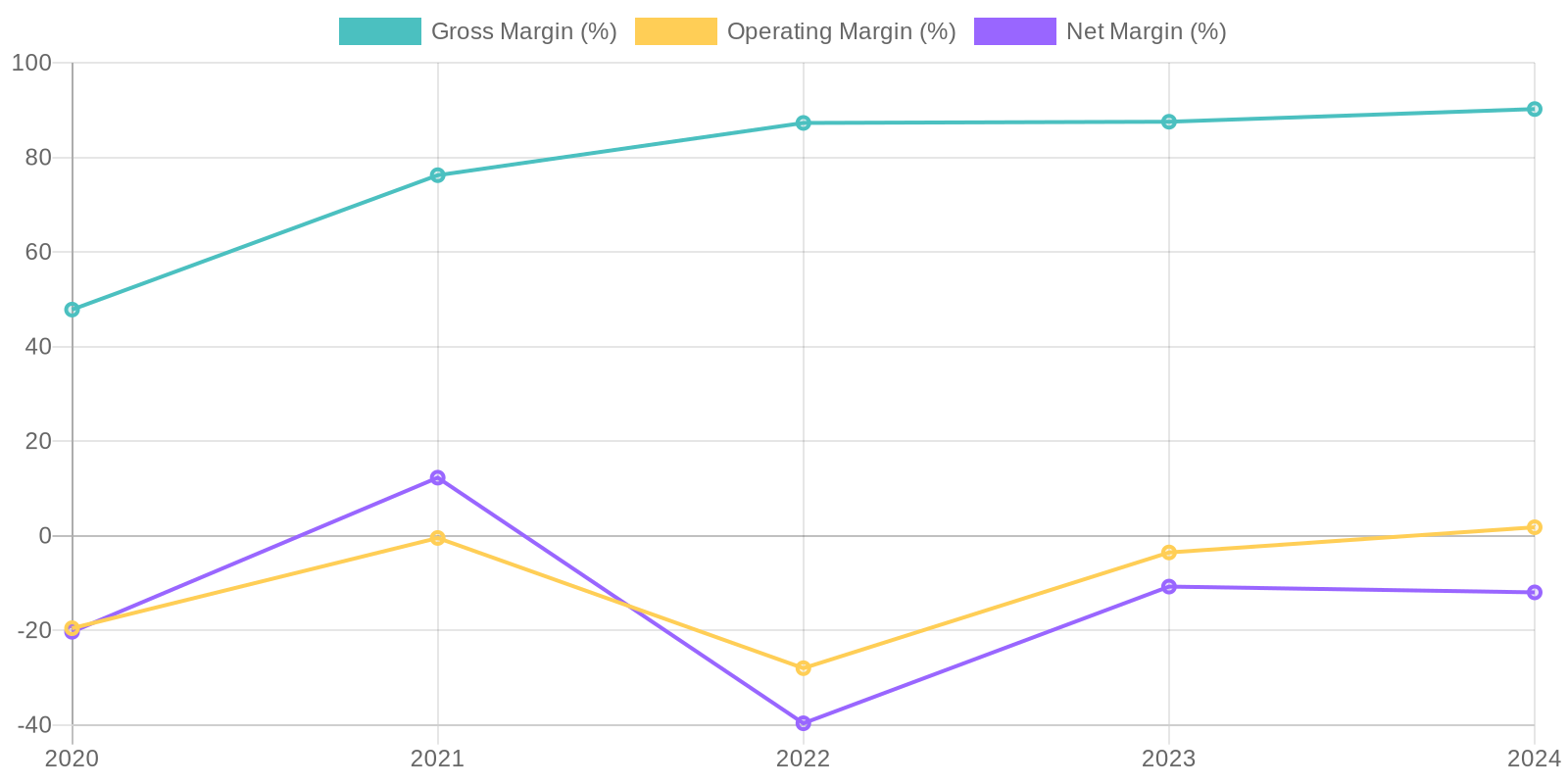 Due to negative equity in some years, ROE is not consistently meaningful; however, it indicates the company's struggle to generate profit from shareholder investments. Similarly, ROIC faces challenges because of negative net income and varying capital structures. It is difficult to assess the company's true efficiency in allocating capital without consistent profitability and positive equity; however, the fluctuations suggest inconsistencies and potential areas for improvement.
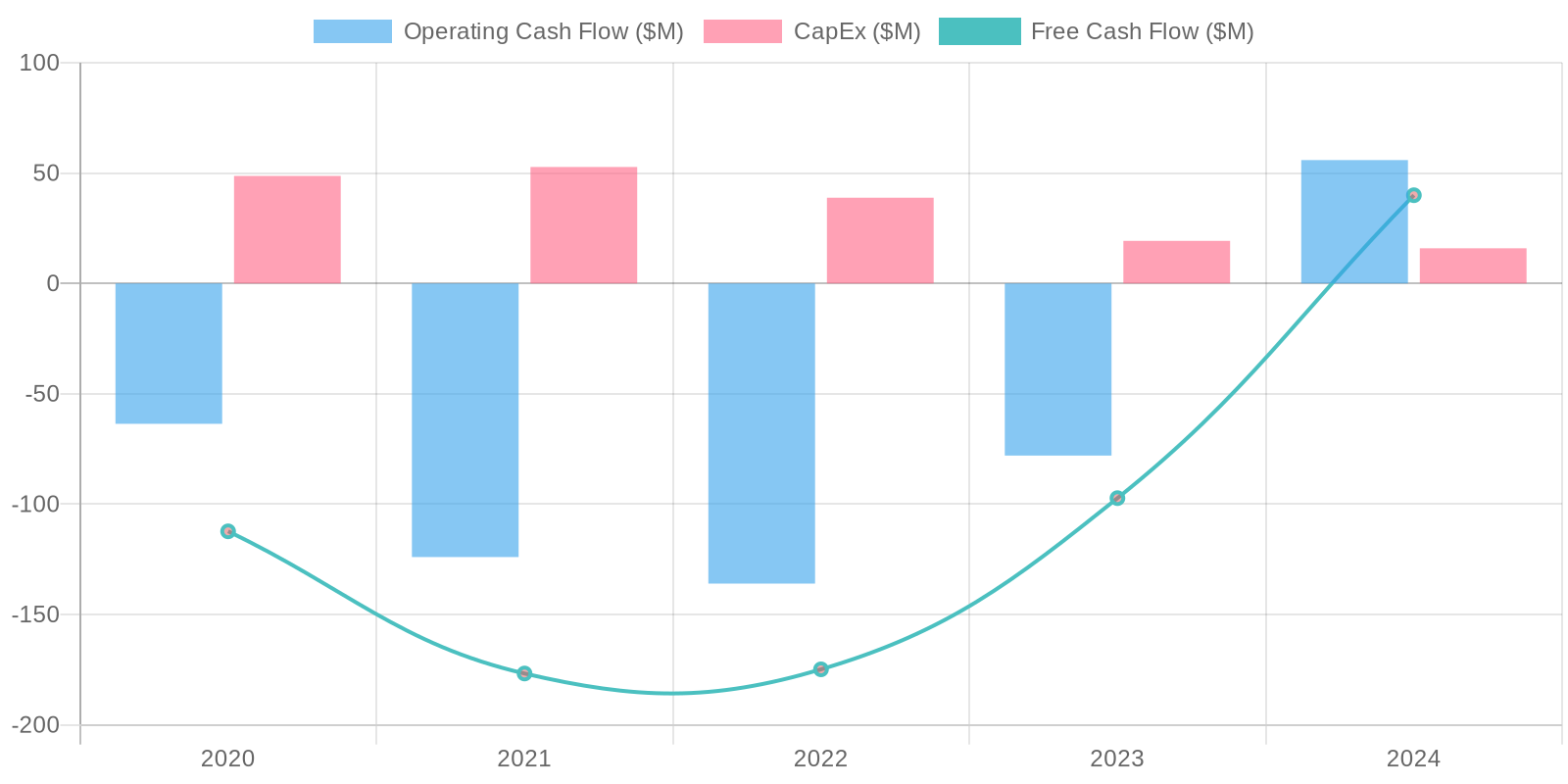 Groupon's free cash flow has shown significant volatility, with large swings between negative and positive values over the past five years, reflecting inconsistent operational performance and challenges in managing working capital. The company has, however, converted net loss to positive free cash flow (FCF) in 2024. Capital expenditures have been relatively modest, indicating a limited need for significant investments in property, plant, and equipment; however, further investigation is needed to assess whether reduced capital expenditures are sufficient for maintaining operational efficiency or whether it will negatively impact future growth.