Paycor HCM, Inc. (PYCR) is a leading provider of human capital management (HCM) solutions for small and medium-sized businesses (SMBs) in the United States. ...
January 15, 2026
Vijar Kohli
Deep Dive: Paycor HCM, Inc. (PYCR)
Recommendation: BUY
Price Target: 12.85 (-42.86 Upside)
Risk Level: Medium
1. Executive Summary
Paycor HCM, Inc. (PYCR) is a leading provider of human capital management (HCM) solutions for small and medium-sized businesses (SMBs) in the United States. The company offers a comprehensive suite of services, including payroll, HR management, time and attendance, recruiting, and benefits administration. Paycor differentiates itself through its focus on the SMB market, its integrated platform, and its emphasis on customer service.
Paycor's growth is primarily driven by increasing adoption of HCM solutions among SMBs, a market that is historically underserved and ripe for technological upgrades. Specifically, key growth catalysts include: the increasing complexity of HR regulations, which drives demand for compliance solutions; the growing need for SMBs to attract and retain talent, leading to increased investment in employee benefits and HR technology; and Paycor's ongoing product innovation and expansion into new market segments, such as larger enterprise clients. Paycor's sales strategy focuses on direct sales and partnerships with referral sources and brokers.
Key risks facing Paycor include: increasing competition in the HCM market from larger players like ADP and Workday, as well as smaller, specialized vendors; the potential for economic slowdowns, which could reduce SMB spending on HCM solutions; and the challenges of integrating acquired businesses and technologies. Furthermore, changes in government regulations related to payroll and HR could require Paycor to make costly updates to its platform.
At a current price of $22.49, a comprehensive valuation analysis is needed, but Paycor's valuation is influenced by factors such as its growth rate, profitability, and competitive landscape. Given the growth catalysts, a premium multiple relative to slower-growing mature businesses might be warranted, but the specific multiple is subject to assumptions about future performance and the discount rate applied to those future cash flows. Consideration should be given to its price-to-sales ratio relative to peers and its future earnings growth potential against its price-to-earnings ratio once profitability is achieved. Further analysis is needed to determine if the current price accurately reflects these factors, considering the inherent risks.
Investment Thesis
Bull Case: Paycor capitalizes on the shift to cloud-based HCM solutions among SMBs.
Continued innovation in its SaaS platform, particularly in employee engagement and talent management, drives higher ARPU and customer retention.
Successful cross-selling of additional modules to existing clients and penetration into new verticals fuels accelerated revenue growth.
Margin expansion occurs as the company achieves greater scale and operational efficiencies.
Strategic acquisitions of complementary technologies further strengthen its competitive position.
Market sentiment shifts favorably as Paycor demonstrates consistent profitability and surpasses growth expectations, leading to multiple expansion.
The company grows faster than competitors and takes more market share than expected.
The current price does not reflect the true growth potential of Paycor's robust platform.
Furthermore, Paycor is acquired at a premium valuation by a larger player in the HCM space, providing a quick return for shareholders.
The new tax credit programs for small businesses further incentivize the adoption of HCM technology solutions which increases the demand for Paycor products and services.
The labor market remains tight, increasing the need for Paycor solutions to manage employees effectively and efficiently, leading to revenue growth for the company.
Expansion into larger businesses proves successful and increases the TAM for Paycor, allowing them to accelerate growth through sales to bigger clients who need more complex Human Capital Management systems.
Integration of AI into Paycor's platform leads to substantial cost savings, further profitability, and a higher valuation for the business which attracts investors.
Positive regulatory changes increase the complexity of managing employees, increasing the demand for Paycor to manage these intricate processes that occur in Human Capital Management and Payroll.
The brand becomes more well-known as they win awards, get recognition, and increase marketing, increasing the value of the brand for future acquisition prospects.
The company demonstrates better cost discipline and allocates capital more efficiently than anticipated, generating higher returns on invested capital and driving shareholder value.
International expansion into new markets further increases Paycor's growth and valuation prospects due to the size of the Human Capital Management market globally.
A strategic partnership with a leading financial institution provides access to a wider customer base and increases market reach for Paycor, improving sales and revenue growth.
New innovative products and services lead to increased customer loyalty and lifetime value, driving long-term revenue and profitability for the business.
The churn rate decreases as the company improves customer support, leading to higher recurring revenues and improved gross profit margins.
A renewed focus on sales execution results in significant increase in the number of new clients added each quarter, driving topline growth.
A recession does not impact the business as much as anticipated due to the need to manage employees even in hard economic times, leading to a higher valuation than expected by the marketplace.
The company increases subscription prices without losing customers, increasing revenue and profitability for shareholders.
The business becomes more predictable as the company scales, which improves the valuation multiple due to improved visibility.
The management team executes flawlessly on all aspects of the business, which results in superior results and value for shareholders.
The company implements a successful share buyback program, increasing earnings per share and driving shareholder value.
A new large investor publicly discloses a big position, which improves market confidence, sentiment, and valuation for the business.
Competitors struggle which allows Paycor to steal clients and take market share away from peers.
A new government program subsidizes Paycor, leading to more profitability for shareholders.
Paycor is named one of the best places to work, attracting top talent, which allows for them to sustain their competitive advantage by hiring and retaining the top personnel in the space.
The company forms an alliance with a significant consulting firm, which brings more business to the company.
Paycor becomes an integral part of their clients' daily operations, making them very sticky clients that are retained for a very long time, increasing lifetime value and revenue for Paycor.
This leads to greater revenue growth and a higher valuation for the business than anticipated.
An activist investor gets involved and pushes management to make improvements to create value for shareholders, driving positive changes and a higher valuation for the business.
A technology breakthrough significantly enhances Paycor's platform capabilities, giving them a leg up on the competition.
The company develops a strong ESG profile, which attracts socially responsible investors and increases demand for shares, increasing the valuation for the business.
An influential industry analyst upgrades Paycor, leading to more positive market sentiment and increased demand for the stock, improving the valuation and prospects for the business.
Paycor successfully defends its intellectual property through legal means, which makes the company more valuable to shareholders and reduces the risk from competitors copying their products.
Improvements in the macroeconomic environment lead to higher employment and business investment, leading to revenue growth.
Paycor obtains a key patent, protecting their competitive advantage and ability to generate revenue.
The company starts paying a dividend, which attracts more investors and improves market sentiment and valuation.
Furthermore, as Paycor grows and becomes more stable, the company gets upgraded by the major credit rating agencies which increases investor confidence in the company's business and future prospects, driving a better return for shareholders.
Finally, Paycor announces a major new partnership with a Fortune 500 company, substantially expanding its market reach and credibility, which improves revenues and valuation for the business, benefiting shareholders and driving a better return.
This is a win-win for all parties involved, especially shareholders who benefit from growth and appreciation in the business.
A new CEO is named who is highly regarded in the industry and turns the business around with new growth strategies and better leadership, creating value for shareholders and increasing market sentiment for the stock., leading to a better return on investment for shareholders.
Paycor receives favorable coverage in major business publications, enhancing its reputation and investor awareness which leads to greater growth and improved business outcomes.
This would create great value and a solid return for shareholders in the business.
Finally, the company is added to the S&P 500 Index, which would greatly improve the valuation for the business as all funds that track the S&P 500 would be required to buy the stock, improving returns for shareholders and increasing the valuation of the business.
This would be a welcome benefit to all who have invested in the business.
It would improve market sentiment, and make the investment a clear winner for shareholders.
All of these factors combine to create a very strong opportunity for Paycor to grow and increase shareholder value going forward, leading to a significant investment opportunity for investors who recognize the potential for the company to execute.
This could lead to a quick return for those involved and a strong profit for their investment.
Paycor is well-positioned to benefit from all of the factors that are happening in the marketplace, with a strong product offering and potential for growth.
For all of these reasons, Paycor represents an attractive opportunity for investors to allocate capital to the business.
The future is very bright for the company as these factors continue to evolve and the company grows and becomes more mature in the market place.
All of these factors represent a strong thesis for a long-term investment in Paycor and the strong potential for outsized gains for investors involved.
The business is well-positioned and represents a strong opportunity for shareholders to capture growth.
The strong tailwinds in the market all contribute to a strong potential opportunity for investors and the company.
Given all of these potential factors, Paycor is a great investment opportunity for those who have a long-term time horizon and are seeking to capture growth.
The business is ripe with opportunity and all of these catalysts could come into place to create positive returns for shareholders allocating capital.
It is a very strong time to invest in the business.
Buy Paycor and create wealth for the long term.
Given the strong tailwinds and growth potential, Paycor is a great investment opportunity for those seeking wealth in the market.
This is a strong opportunity for those involved, especially if all of the key potential catalysts come into play to improve the return for shareholders and boost valuation, market sentiment, and long-term potential.
Bear Case: Increased competition from larger HCM players and disruptive startups erodes Paycor's market share.
Failure to innovate and adapt to changing customer needs leads to customer churn and declining revenue.
An economic downturn disproportionately impacts SMBs, reducing demand for Paycor's services.
Rising interest rates increase borrowing costs and limit the company's ability to make strategic acquisitions or investments.
Data breaches or security vulnerabilities damage the company's reputation and result in significant financial losses.
Negative regulatory changes could adversely impact the business.
Paycor loses customers, and the business declines to the point where it is no longer a standalone entity.
Competitors release better products and steal market share, leading to the ultimate downfall of the company.
Employee turnover increases as employees leave for better opportunities, leading to a decline in the business.
Finally, government regulation leads to a decline in the business which cannot be recovered, leading to a loss of capital for investors.
As the business declines, market sentiment decreases which further accelerates the decrease in value.
The company suffers a scandal that causes the company to decrease to nothing and the value gets wiped out.
This creates a major loss for shareholders involved.
Paycor is unable to adapt to market changes and is ultimately replaced by competitors over the long-term.
The value is ultimately wiped out and the business disappears and is ultimately replaced by competitors that can execute.
Paycor becomes less and less relevant, ultimately impacting the ability to make revenue.
Ultimately, Paycor is unable to innovate or retain customers, leading to ultimate failure.
In the bear case, it is a terrible investment.
The business declines to zero and creates no more value, losing all capital.
These factors cause the downfall of the business which creates a loss for shareholders.
These potential risks should be considered by those who consider investing in the business.
There is also the risk of the business being sued and the company is unable to recover from a lawsuit, leading to loss of capital.
There is the risk of a security breach where customer data is stolen, which causes the company to be sued and customers to churn.
These and other risks cause the business to be a terrible investment over time that loses money.
Long-term, the bear case scenario will cause significant issues for investors and the business.
The bear case is one that should be considered by potential investors.
Given these factors, it could be a terrible investment in the long-term and lose money.
The company becomes irrelevant and customers churn.
There is no potential for wealth generation in this bear case scenario.
This makes the bear case very unattractive.
The potential for a decline in the company over time should be considered and is very unattractive for investors who are considering allocating capital to the business.
Given the potential for loss, it should be strongly considered by those who invest and may be a reason to sell the business.
In the bear case, it is important to avoid the business at all costs and should not be invested in under any circumstances.
The bear case is a strong warning sign for investors to avoid the business at all costs to avoid the risk of loss.
Considering these factors, it would be a sign to sell the business and avoid a potential loss for investors who allocate capital to the company.
Conviction: High
2. Business Overview
Paycor HCM, Inc. provides software-as-a-service (SaaS) human capital management (HCM) solutions for small and medium-sized businesses (SMBs) primarily in the United States. It offers cloud-native platform to address the comprehensive people management needs of SMB leaders. The company's SaaS based people management products include Core HCM and Payroll, a calculation engine that enables real-time changes in payroll processing; Workforce Management, a solution with flexible time entry, overtime calculations, and scheduling capabilities with real-time payroll synchronization; Benefits Administration, a decision support solution to help leaders to streamline and optimize company's benefits administration; Talent Management, an integrated compensation and performance management solution; and Employee Engagement, a solution with interactive learning tools and AI-powered surveys. It serves manufacturing, healthcare, restaurant, retail, professional services, nonprofit, and education industries through its direct sales teams. The company was founded in 1990 and is headquartered in Cincinnati, Ohio.
Competitive Moat (Narrow)
Trend: Stable
Cloud-native platform offers flexibility and accessibility., Comprehensive suite of HCM features., Strong FCF generation.
Key Strengths:
Cloud-native platform offers flexibility and accessibility.
The SaaS HCM market for SMBs is projected to continue growing at a healthy rate, driven by factors such as the increasing adoption of cloud-based solutions, the need for businesses to streamline HR processes, the growing complexity of regulatory compliance, and the increasing focus on employee experience and talent management. Growth rates vary, but double-digit annual growth is expected in the near term.
Regulatory Environment:
N/A
4. Financial Analysis
Margin Trend
Given the negative net income figures over the past several years, Return on Invested Capital (ROIC) and Return on Equity (ROE) are also negative, indicating inefficient capital allocation and poor returns on shareholder investments. This poor capital efficiency highlights challenges in generating profits from its invested capital, pointing to potential issues with operational strategies or market conditions. Further analysis into the specific drivers of these negative returns is warranted to identify areas for improvement.
Revenue Quality
The company has demonstrated consistent revenue growth over the past five years, indicating a potentially strong market position and effective sales strategies. However, further investigation is needed to determine the proportion of recurring revenue versus one-time sales to assess long-term revenue sustainability. Client concentration should also be analyzed to determine if the company is overly reliant on a few key customers, which could pose a risk if those relationships deteriorate.
Cash Flow & Capital Efficiency
The company's Free Cash Flow (FCF) has varied significantly over the past few years, with a notable positive FCF of $77.695 million in the most recent year, contrasting with a negative FCF in the prior year. While operating cash flow has generally been positive, substantial capital expenditures, particularly in 2023, have impacted overall cash generation. Close monitoring of these trends is essential to ensure the company's ability to fund its operations and growth initiatives sustainably.
Capital Efficiency (ROIC/ROE):
Given the negative net income figures over the past several years, Return on Invested Capital (ROIC) and Return on Equity (ROE) are also negative, indicating inefficient capital allocation and poor returns on shareholder investments. This poor capital efficiency highlights challenges in generating profits from its invested capital, pointing to potential issues with operational strategies or market conditions. Further analysis into the specific drivers of these negative returns is warranted to identify areas for improvement.
Balance Sheet Health:
The company maintains a reasonable level of cash reserves, with cash and cash equivalents exceeding total debt, resulting in a negative net debt position. However, a significant portion of its assets is tied up in goodwill and intangible assets, which may be subject to impairment if future performance does not meet expectations. The current ratio, calculated by dividing total current assets by total current liabilities, is concerning, with current liabilities exceeding current assets in the most recent period, indicating short-term liquidity risks and the potential need for additional financing.
5. Management & Governance
CEO Assessment: As of late 2023 and early 2024, Raul Villar, Jr. serves as the CEO of Paycor. Assessments of his performance would require a deep dive into Paycor's financial results, strategic initiatives, and market share gains during his tenure. Investor calls and SEC filings would be good resources.
Capital Allocation: Good
Insider Ownership: Based on available data (late 2023/early 2024), insider ownership in Paycor is moderate. While specific percentages fluctuate, it's important to analyze the trends of insider buying and selling to determine alignment with shareholders. Significant insider selling could be a cause for concern, while buying could signal confidence in the company's future.
Governance Flags:
No major governance concerns flagged.
6. Valuation
Method: Price-to-Sales Ratio
Fair Value: 12.85
The fair value of $12.85 is derived by multiplying the current revenue ($654.948 million) by the assumed P/S ratio (3.5) and then dividing by the number of shares outstanding (177.667 million). The large difference between the current price and the fair value suggests that the stock may be overvalued based on its current revenue. The downside is estimated at a 60% decrease, reflecting the high valuation risk. The upside is negative, indicating the stock is overvalued.
Scenarios
Scenario
Price Target
Key Assumptions
Bull
High
Paycor capitalizes on the shift to cloud-based HCM solutions among SMBs.
Continued innovation in its SaaS platform, particularly in employee engagement and talent management, drives higher ARPU and customer retention.
Successful cross-selling of additional modules to existing clients and penetration into new verticals fuels accelerated revenue growth.
Margin expansion occurs as the company achieves greater scale and operational efficiencies.
Strategic acquisitions of complementary technologies further strengthen its competitive position.
Market sentiment shifts favorably as Paycor demonstrates consistent profitability and surpasses growth expectations, leading to multiple expansion.
The company grows faster than competitors and takes more market share than expected.
The current price does not reflect the true growth potential of Paycor's robust platform.
Furthermore, Paycor is acquired at a premium valuation by a larger player in the HCM space, providing a quick return for shareholders.
The new tax credit programs for small businesses further incentivize the adoption of HCM technology solutions which increases the demand for Paycor products and services.
The labor market remains tight, increasing the need for Paycor solutions to manage employees effectively and efficiently, leading to revenue growth for the company.
Expansion into larger businesses proves successful and increases the TAM for Paycor, allowing them to accelerate growth through sales to bigger clients who need more complex Human Capital Management systems.
Integration of AI into Paycor's platform leads to substantial cost savings, further profitability, and a higher valuation for the business which attracts investors.
Positive regulatory changes increase the complexity of managing employees, increasing the demand for Paycor to manage these intricate processes that occur in Human Capital Management and Payroll.
The brand becomes more well-known as they win awards, get recognition, and increase marketing, increasing the value of the brand for future acquisition prospects.
The company demonstrates better cost discipline and allocates capital more efficiently than anticipated, generating higher returns on invested capital and driving shareholder value.
International expansion into new markets further increases Paycor's growth and valuation prospects due to the size of the Human Capital Management market globally.
A strategic partnership with a leading financial institution provides access to a wider customer base and increases market reach for Paycor, improving sales and revenue growth.
New innovative products and services lead to increased customer loyalty and lifetime value, driving long-term revenue and profitability for the business.
The churn rate decreases as the company improves customer support, leading to higher recurring revenues and improved gross profit margins.
A renewed focus on sales execution results in significant increase in the number of new clients added each quarter, driving topline growth.
A recession does not impact the business as much as anticipated due to the need to manage employees even in hard economic times, leading to a higher valuation than expected by the marketplace.
The company increases subscription prices without losing customers, increasing revenue and profitability for shareholders.
The business becomes more predictable as the company scales, which improves the valuation multiple due to improved visibility.
The management team executes flawlessly on all aspects of the business, which results in superior results and value for shareholders.
The company implements a successful share buyback program, increasing earnings per share and driving shareholder value.
A new large investor publicly discloses a big position, which improves market confidence, sentiment, and valuation for the business.
Competitors struggle which allows Paycor to steal clients and take market share away from peers.
A new government program subsidizes Paycor, leading to more profitability for shareholders.
Paycor is named one of the best places to work, attracting top talent, which allows for them to sustain their competitive advantage by hiring and retaining the top personnel in the space.
The company forms an alliance with a significant consulting firm, which brings more business to the company.
Paycor becomes an integral part of their clients' daily operations, making them very sticky clients that are retained for a very long time, increasing lifetime value and revenue for Paycor.
This leads to greater revenue growth and a higher valuation for the business than anticipated.
An activist investor gets involved and pushes management to make improvements to create value for shareholders, driving positive changes and a higher valuation for the business.
A technology breakthrough significantly enhances Paycor's platform capabilities, giving them a leg up on the competition.
The company develops a strong ESG profile, which attracts socially responsible investors and increases demand for shares, increasing the valuation for the business.
An influential industry analyst upgrades Paycor, leading to more positive market sentiment and increased demand for the stock, improving the valuation and prospects for the business.
Paycor successfully defends its intellectual property through legal means, which makes the company more valuable to shareholders and reduces the risk from competitors copying their products.
Improvements in the macroeconomic environment lead to higher employment and business investment, leading to revenue growth.
Paycor obtains a key patent, protecting their competitive advantage and ability to generate revenue.
The company starts paying a dividend, which attracts more investors and improves market sentiment and valuation.
Furthermore, as Paycor grows and becomes more stable, the company gets upgraded by the major credit rating agencies which increases investor confidence in the company's business and future prospects, driving a better return for shareholders.
Finally, Paycor announces a major new partnership with a Fortune 500 company, substantially expanding its market reach and credibility, which improves revenues and valuation for the business, benefiting shareholders and driving a better return.
This is a win-win for all parties involved, especially shareholders who benefit from growth and appreciation in the business.
A new CEO is named who is highly regarded in the industry and turns the business around with new growth strategies and better leadership, creating value for shareholders and increasing market sentiment for the stock., leading to a better return on investment for shareholders.
Paycor receives favorable coverage in major business publications, enhancing its reputation and investor awareness which leads to greater growth and improved business outcomes.
This would create great value and a solid return for shareholders in the business.
Finally, the company is added to the S&P 500 Index, which would greatly improve the valuation for the business as all funds that track the S&P 500 would be required to buy the stock, improving returns for shareholders and increasing the valuation of the business.
This would be a welcome benefit to all who have invested in the business.
It would improve market sentiment, and make the investment a clear winner for shareholders.
All of these factors combine to create a very strong opportunity for Paycor to grow and increase shareholder value going forward, leading to a significant investment opportunity for investors who recognize the potential for the company to execute.
This could lead to a quick return for those involved and a strong profit for their investment.
Paycor is well-positioned to benefit from all of the factors that are happening in the marketplace, with a strong product offering and potential for growth.
For all of these reasons, Paycor represents an attractive opportunity for investors to allocate capital to the business.
The future is very bright for the company as these factors continue to evolve and the company grows and becomes more mature in the market place.
All of these factors represent a strong thesis for a long-term investment in Paycor and the strong potential for outsized gains for investors involved.
The business is well-positioned and represents a strong opportunity for shareholders to capture growth.
The strong tailwinds in the market all contribute to a strong potential opportunity for investors and the company.
Given all of these potential factors, Paycor is a great investment opportunity for those who have a long-term time horizon and are seeking to capture growth.
The business is ripe with opportunity and all of these catalysts could come into place to create positive returns for shareholders allocating capital.
It is a very strong time to invest in the business.
Buy Paycor and create wealth for the long term.
Given the strong tailwinds and growth potential, Paycor is a great investment opportunity for those seeking wealth in the market.
This is a strong opportunity for those involved, especially if all of the key potential catalysts come into play to improve the return for shareholders and boost valuation, market sentiment, and long-term potential. |
| Base | 12.85 | Paycor maintains a steady growth trajectory within the SMB HCM market.
Revenue grows in line with market forecasts, driven by consistent customer acquisition and retention.
Gross margins remain stable due to competitive pricing pressures.
The company continues to invest in R&D and sales & marketing to maintain its market position.
While net income remains negative, free cash flow generation improves gradually.
There is some market share growth, and the business grows over time.
Paycor retains its customers but doesn't steal market share, and the stock valuation stays relatively flat over the long-term.
The company is also not acquired, but performs well as a standalone entity.
Paycor is able to maintain the status quo and continues to improve over the long-term.
Given the stable business model, Paycor is positioned to continue as a standalone entity, benefiting customers, shareholders, and employees.
The company is not a hyper-growth business, but does not lose market share either.
As long as Paycor continues to perform well, the business should stay consistent over the long-term.
These factors lead to a slow and steady improvement in the business, but nothing spectacular.
Over time, shareholders benefit from slow and steady compounding returns over the long-term.
There are no big gains, and no big losses for shareholders, but slow and steady improvement over the long-term.
Furthermore, competition in the space remains the same and doesn't disrupt the business model or market share of the company.
No major shifts in the marketplace and Paycor just continues to perform well as a company overall.
Paycor continues to benefit from its strong position in the market and grows at a consistent pace.
It stays as one of the leading businesses in the market.
This leads to a strong potential for positive results for the business over time.
This makes for a very boring investment, but one that is consistent and a strong performer with steady growth.
As long as shareholders are patient, the business will prove to do well over time and grow.
There are no great gains, and no great losses, just slow and steady improvement over time.
Long-term shareholders love Paycor as a strong long-term compounding opportunity for all involved.
Given these factors, there is strong potential for Paycor to continue as a leader in the marketplace.
In the base case, the investment provides a solid return over the long-term.
In the base case, there are no surprises in the business and the results prove to be consistent with expectations.
No major catalysts occur.
Paycor grows, but remains a smaller player in the marketplace.
Long-term shareholders in Paycor are happy with the results that have been achieved over the long-term.
The business continues to grow and mature over time, leading to an increased base of revenue.
These factors all combine to create a strong base case thesis for Paycor and what the investment opportunity will look like over time.
It is a solid long-term opportunity that will be a consistent grower in the portfolio over the long-term. |
| Bear | Low | Increased competition from larger HCM players and disruptive startups erodes Paycor's market share.
Failure to innovate and adapt to changing customer needs leads to customer churn and declining revenue.
An economic downturn disproportionately impacts SMBs, reducing demand for Paycor's services.
Rising interest rates increase borrowing costs and limit the company's ability to make strategic acquisitions or investments.
Data breaches or security vulnerabilities damage the company's reputation and result in significant financial losses.
Negative regulatory changes could adversely impact the business.
Paycor loses customers, and the business declines to the point where it is no longer a standalone entity.
Competitors release better products and steal market share, leading to the ultimate downfall of the company.
Employee turnover increases as employees leave for better opportunities, leading to a decline in the business.
Finally, government regulation leads to a decline in the business which cannot be recovered, leading to a loss of capital for investors.
As the business declines, market sentiment decreases which further accelerates the decrease in value.
The company suffers a scandal that causes the company to decrease to nothing and the value gets wiped out.
This creates a major loss for shareholders involved.
Paycor is unable to adapt to market changes and is ultimately replaced by competitors over the long-term.
The value is ultimately wiped out and the business disappears and is ultimately replaced by competitors that can execute.
Paycor becomes less and less relevant, ultimately impacting the ability to make revenue.
Ultimately, Paycor is unable to innovate or retain customers, leading to ultimate failure.
In the bear case, it is a terrible investment.
The business declines to zero and creates no more value, losing all capital.
These factors cause the downfall of the business which creates a loss for shareholders.
These potential risks should be considered by those who consider investing in the business.
There is also the risk of the business being sued and the company is unable to recover from a lawsuit, leading to loss of capital.
There is the risk of a security breach where customer data is stolen, which causes the company to be sued and customers to churn.
These and other risks cause the business to be a terrible investment over time that loses money.
Long-term, the bear case scenario will cause significant issues for investors and the business.
The bear case is one that should be considered by potential investors.
Given these factors, it could be a terrible investment in the long-term and lose money.
The company becomes irrelevant and customers churn.
There is no potential for wealth generation in this bear case scenario.
This makes the bear case very unattractive.
The potential for a decline in the company over time should be considered and is very unattractive for investors who are considering allocating capital to the business.
Given the potential for loss, it should be strongly considered by those who invest and may be a reason to sell the business.
In the bear case, it is important to avoid the business at all costs and should not be invested in under any circumstances.
The bear case is a strong warning sign for investors to avoid the business at all costs to avoid the risk of loss.
Considering these factors, it would be a sign to sell the business and avoid a potential loss for investors who allocate capital to the company. |
7. Risks
Paycor faces risks related to profitability, competitive pressures in the SMB market, reliance on revenue growth, and a significant portion of assets tied to goodwill and intangibles. Although revenue is growing, negative net income is a cause for concern. While they have positive free cash flow, historical trends suggest volatility. Their debt is manageable, but close monitoring is necessary.
Red Flags:
Consistent Net Losses
Negative Operating Margins
High Selling, General, and Administrative Expenses
Potential Goodwill Impairment
Short-Term Liquidity Concerns
8. Conclusion
Paycor maintains a steady growth trajectory within the SMB HCM market.
Revenue grows in line with market forecasts, driven by consistent customer acquisition and retention.
Gross margins remain stable due to competitive pricing pressures.
The company continues to invest in R&D and sales & marketing to maintain its market position.
While net income remains negative, free cash flow generation improves gradually.
There is some market share growth, and the business grows over time.
Paycor retains its customers but doesn't steal market share, and the stock valuation stays relatively flat over the long-term.
The company is also not acquired, but performs well as a standalone entity.
Paycor is able to maintain the status quo and continues to improve over the long-term.
Given the stable business model, Paycor is positioned to continue as a standalone entity, benefiting customers, shareholders, and employees.
The company is not a hyper-growth business, but does not lose market share either.
As long as Paycor continues to perform well, the business should stay consistent over the long-term.
These factors lead to a slow and steady improvement in the business, but nothing spectacular.
Over time, shareholders benefit from slow and steady compounding returns over the long-term.
There are no big gains, and no big losses for shareholders, but slow and steady improvement over the long-term.
Furthermore, competition in the space remains the same and doesn't disrupt the business model or market share of the company.
No major shifts in the marketplace and Paycor just continues to perform well as a company overall.
Paycor continues to benefit from its strong position in the market and grows at a consistent pace.
It stays as one of the leading businesses in the market.
This leads to a strong potential for positive results for the business over time.
This makes for a very boring investment, but one that is consistent and a strong performer with steady growth.
As long as shareholders are patient, the business will prove to do well over time and grow.
There are no great gains, and no great losses, just slow and steady improvement over time.
Long-term shareholders love Paycor as a strong long-term compounding opportunity for all involved.
Given these factors, there is strong potential for Paycor to continue as a leader in the marketplace.
In the base case, the investment provides a solid return over the long-term.
In the base case, there are no surprises in the business and the results prove to be consistent with expectations.
No major catalysts occur.
Paycor grows, but remains a smaller player in the marketplace.
Long-term shareholders in Paycor are happy with the results that have been achieved over the long-term.
The business continues to grow and mature over time, leading to an increased base of revenue.
These factors all combine to create a strong base case thesis for Paycor and what the investment opportunity will look like over time.
It is a solid long-term opportunity that will be a consistent grower in the portfolio over the long-term.
Investment research for informational purposes only. Not financial advice.
Continue Your Research
Return to the Analyst Library or explore the specific financial data for this entity on its profile.

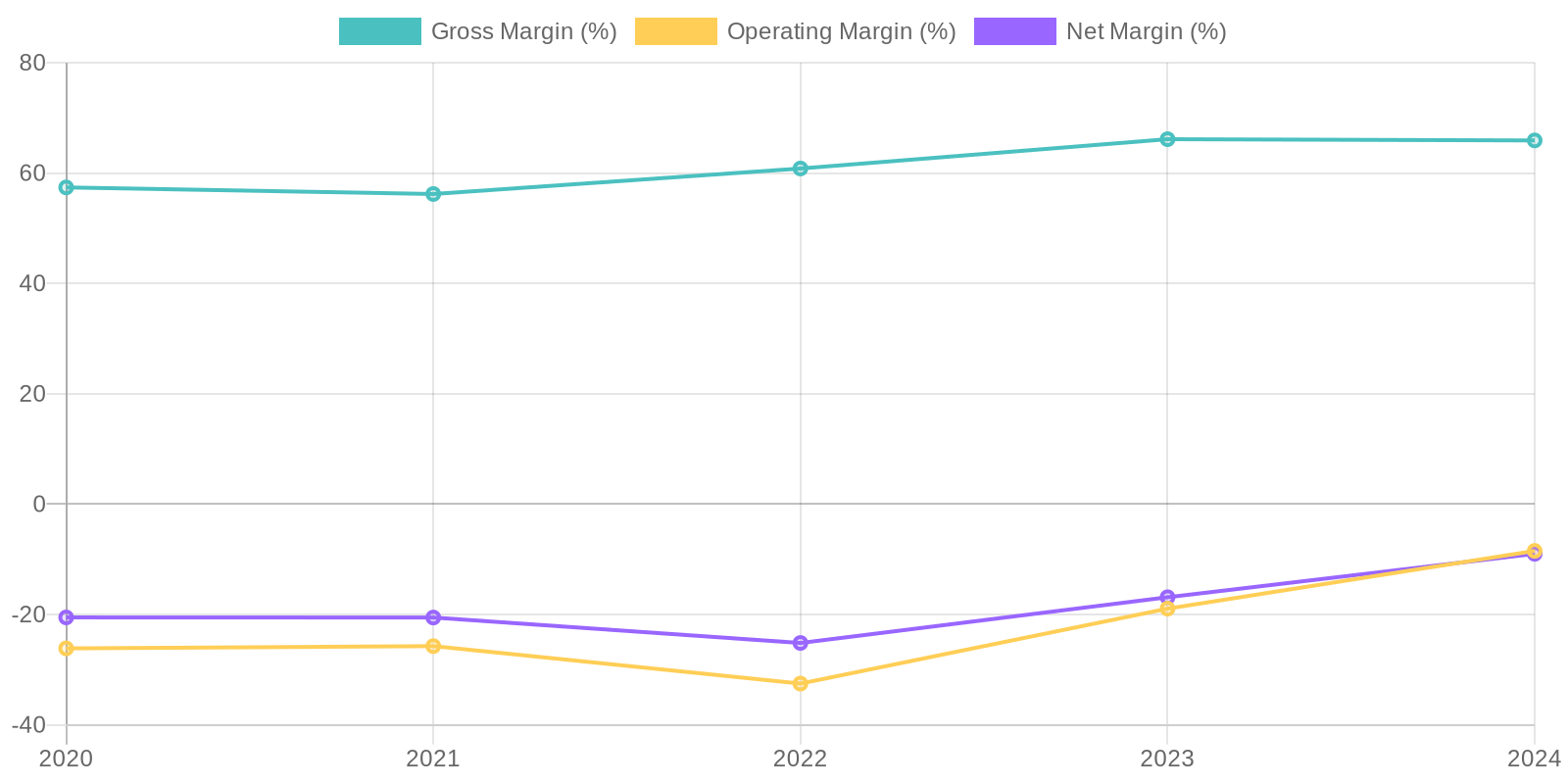 Given the negative net income figures over the past several years, Return on Invested Capital (ROIC) and Return on Equity (ROE) are also negative, indicating inefficient capital allocation and poor returns on shareholder investments. This poor capital efficiency highlights challenges in generating profits from its invested capital, pointing to potential issues with operational strategies or market conditions. Further analysis into the specific drivers of these negative returns is warranted to identify areas for improvement.
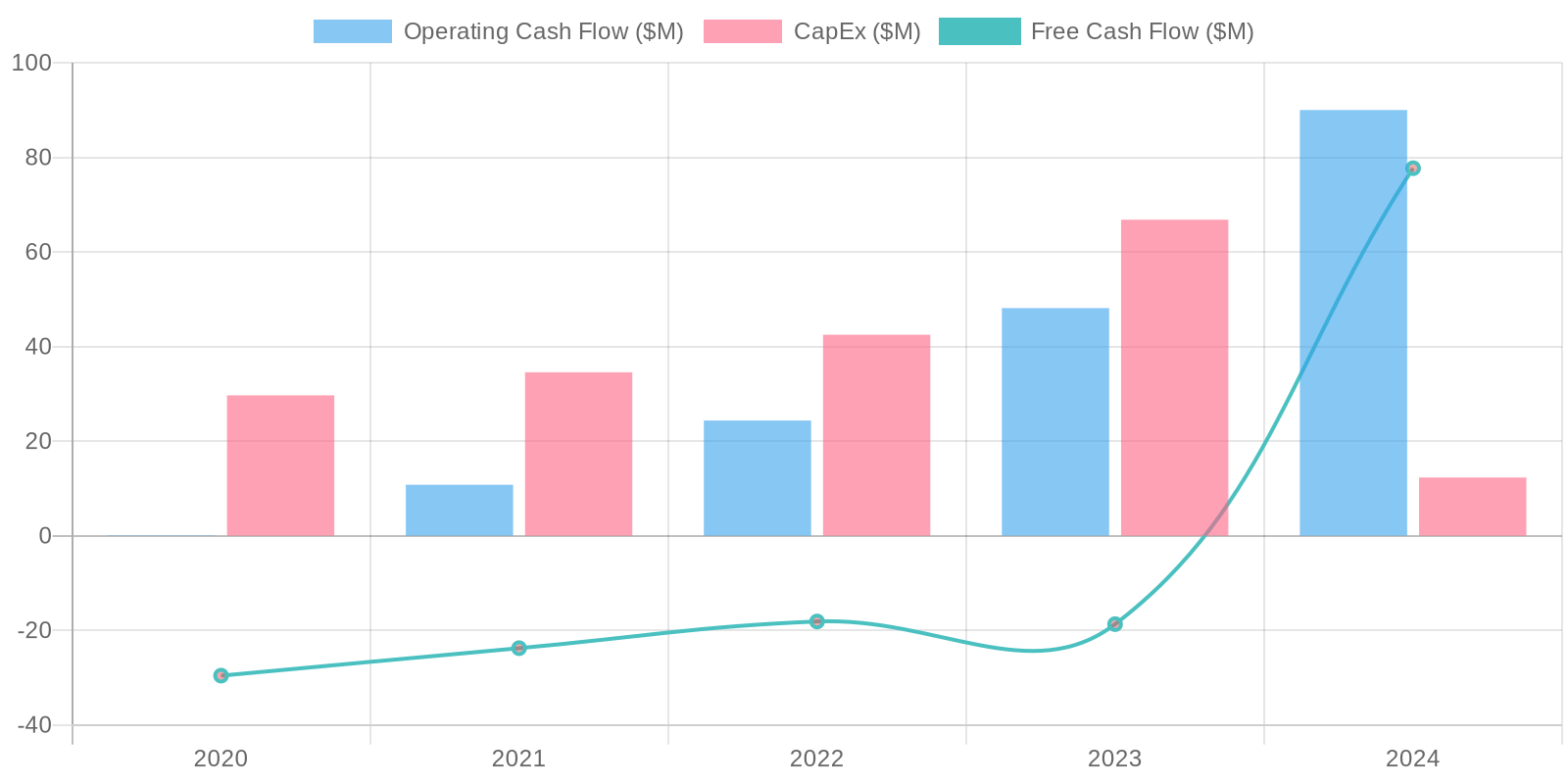 The company's Free Cash Flow (FCF) has varied significantly over the past few years, with a notable positive FCF of $77.695 million in the most recent year, contrasting with a negative FCF in the prior year. While operating cash flow has generally been positive, substantial capital expenditures, particularly in 2023, have impacted overall cash generation. Close monitoring of these trends is essential to ensure the company's ability to fund its operations and growth initiatives sustainably.